
As someone who drifts in between cultures, I’m descriptive of several labels. Chinese. Australian. Asian Australian. South-East Asian. As I go about my days, I’m also descriptive of: Writer. Neurodivergent. Introvert. Astrologer. And more…
Our cultural identities are often a source of pride. Yet at times our cultural affiliations can be conflicting and confusing, and we wonder where we fit in.
It raises compelling questions: should we label ourselves? Should society label us? Should we associate and anchor ourselves to a cultural identity through and through?
Perhaps we shouldn’t fixate on labels all the time. For our identities are fluid, multi-faceted and for us to redefine through our seasons.
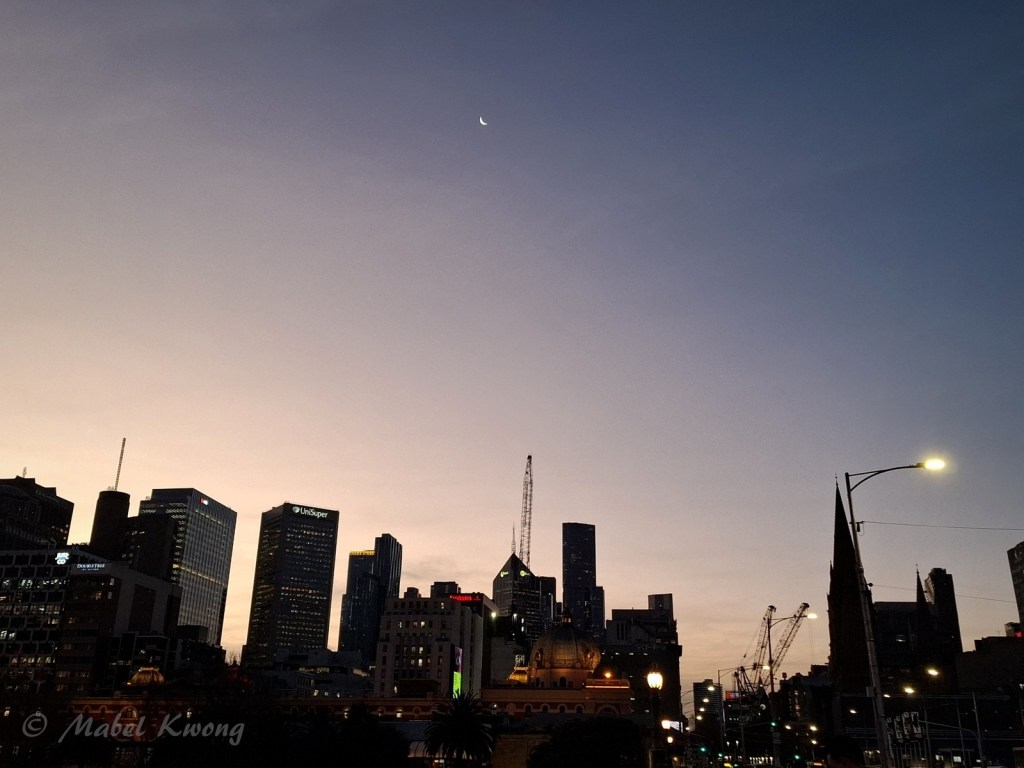
On this evening city walk, I’m content with being another face in the peak hour crowd.
I look down and fiddle with my camera. I’m eager to see what the sky offers tonight. Maybe the Moon… I wonder wishfully.
Creativity is my escape from navigating cultural labels and expectations. An escape from flak for speaking non-fluent Chinese. For appreciating Chinese New Year and Christmas but choosing to not always partake. For being too quiet when I prefer listening…
I’ve wondered what ‘Asian Australian’ means to me. To me, it describes my citizenship. A reference to the tensions of being too Asian to be Australian, too Western to be Asian. Ironically at the same time, living the best of both worlds. Some semblance of story to my face.
It’s a label I’ve long ascribed to. And a label I distance from now and again, along with ‘Asian’ and ‘Australian’: to be free. To escape the associations and experiences behind the labels that I am ‘not enough’ of a culture. Slipping into idyllic moments of letting myself be.
Labels are social constructs and cultural identities encompass a collection of varying experiences. On one hand, self-labelling empowers when coming from a place of authenticity. Our society naturally categorises in earnest attempts to understand define each another. Cultural labels highlight commonalities, piquing us to celebrate diverse values, beliefs and practices.
On the other hand, labels foster stereotypes. In her essay Why Call Me That, Trish Prentice writes labels reduce the richness in what we’re labelling, not describing whole experiences – and importantly, labels are context dependent. She suggests terms like ‘culturally and linguistically diverse (CALD) and ‘people of colour’ (POC) mask nuances and differences which specific communities face in Australia and Western society.
It’s a fair point. Any two of us can share the same cultural label but experience the beauty of completely different triumphs, struggles and ethnocultural characteristics. It’s no surprise labels mean different things to each of us. A label or calling ourselves part of a cultural group could mean something to us one day, and nothing at all the very next. In a predominantly white Australia I am seen as a ‘person of colour’ but in a more ethnically-centred Singapore, I am referred to as ‘Chinese’ all the time.
The utmost passion and pride in our culture and heritage naturally drives a defensiveness towards this aspect of ourselves. It can attest challenges to see past and accept racial differences. It intimidates, and sometimes we feel a certain time and place is favoured expressing certain identities, apprehensive on where we stand.
Such profiling is alas a stark reminder of inequality and marginalisation. It’s hard to dismiss these terms. Some of us relate to them in the silent struggles of feeling comfortable in and owning our individual identity, while striving against racial hierarchies to find our place in the world.
‘Inner conflict is parallel to, and a function of the struggle…between the inbred realisation that one is part of a large whole (society or mankind) and the innermost feeling that one is a whole, unique and self-sufficient.’
– Dane Rudhyar, The Lunation Cycle: A Key to the Understanding of Personality
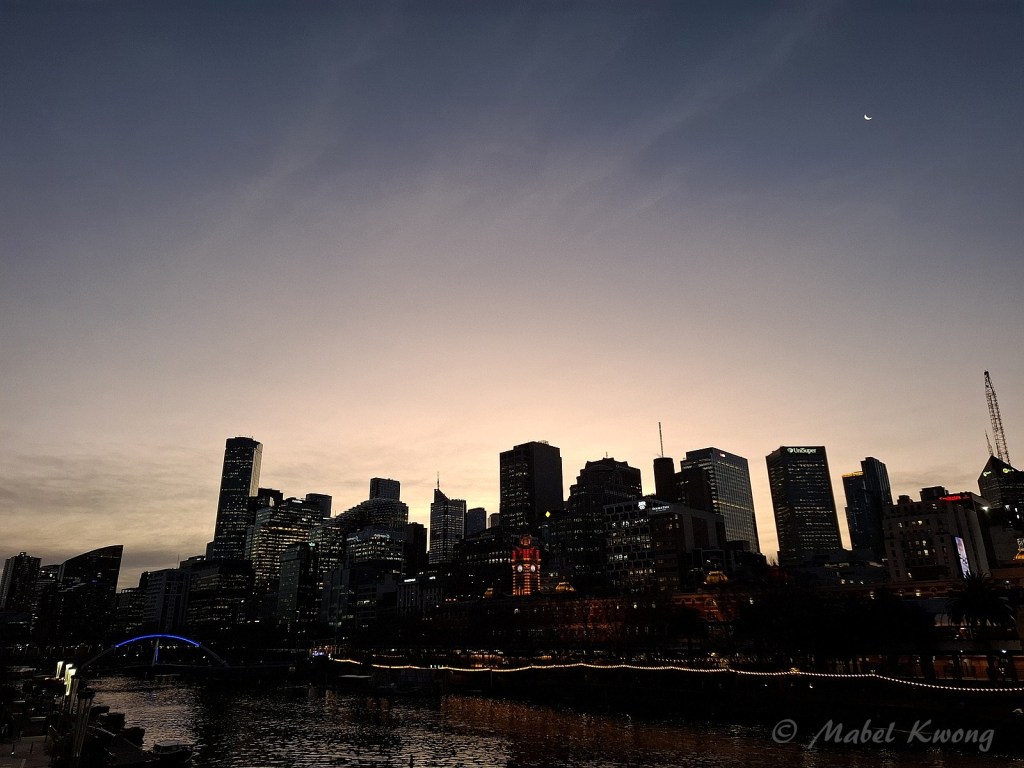
I pause at one of the lookouts along Princes Bridge. Like other evenings, others stop and admire the sunset over the river. Hearing them speak in languages unfamiliar, I wonder if they are tourists. Or from around. It really is none of my business.
Looking out into the distance, I put the thought out of my mind and return to my reverie of solitude, taking in the view.
‘Where are you from?’ is what we are used to saying by way of introduction. Whether out of genuine curiosity or outright nosiness, it probes our connections. Puts us on the spot to define or share a bit about ourselves. But not everyone wants to share their backstory.
Labels are part of our everyday language. How we address ourselves and each other is a reflection of where we are coming from, and influencing how others perceive cultures and the world as well.
‘I live in Australia,’ is how I like to respond. Factual, a nod to where I am based in this season. A nudge to be open towards one another.
However a lot of the time we can’t help but want a direct answer. For we seek and find comfort in the familiar and in the familiarity we see and feel in others.
At times cultural labels call attention to a pressure to conform to a way of life, limiting self-expression. When we find some value or importance in the culture we’ve been brought up with, perhaps there’s an obligation to respect and be loyal to that. Maybe more so in Asian cultures, typically collectivist in nature.
What is a ‘real’ Chinese or Australian is highly subjective. It’s hard to change people’s perception on this sometimes, for again, others have pride in what they identify with. What we can change is how we talk, how we look at and how we love ourselves. After all, as I wrote previously belonging starts with self-acceptance.
While I am and have always been proud of being Chinese, my rebellious inner streak grapples with notions of Chineseness. Years spent living the reality of being an Asian model-minority, grateful for stability and privilege in many ways. But so used to identifying with this path, the fear of stepping out as a creative plagued me.
Then one day, where it just so happened I was reckless feared nothing, I started writing, picked up a camera, and never looked back. Free in that moment.
Interestingly, being Asian Australian has largely influenced my creativity – an outlet to explore what it means to belong in the in-between, to share and serve. There’s no running from or forgetting my past, acknowledging how it has shaped me and paying forward where I can. As Eleanor Roosevelt said, ‘With freedom comes responsibility.’
In distancing and giving ourselves space from labels and groups associated, perhaps we redefine what our identity means to us. A blank slate of infinite potential beckons. It takes some of the emotion out of the experience of identity crisis, then again, perhaps replaced by other feelings. A time of reflection on who am I? Where do we really belong? Even if we find it hard to belong, what can we offer?
The less fixation on trying to fit a label or group, the more freedom to come into oneself, experiment and find what is authentic to us.
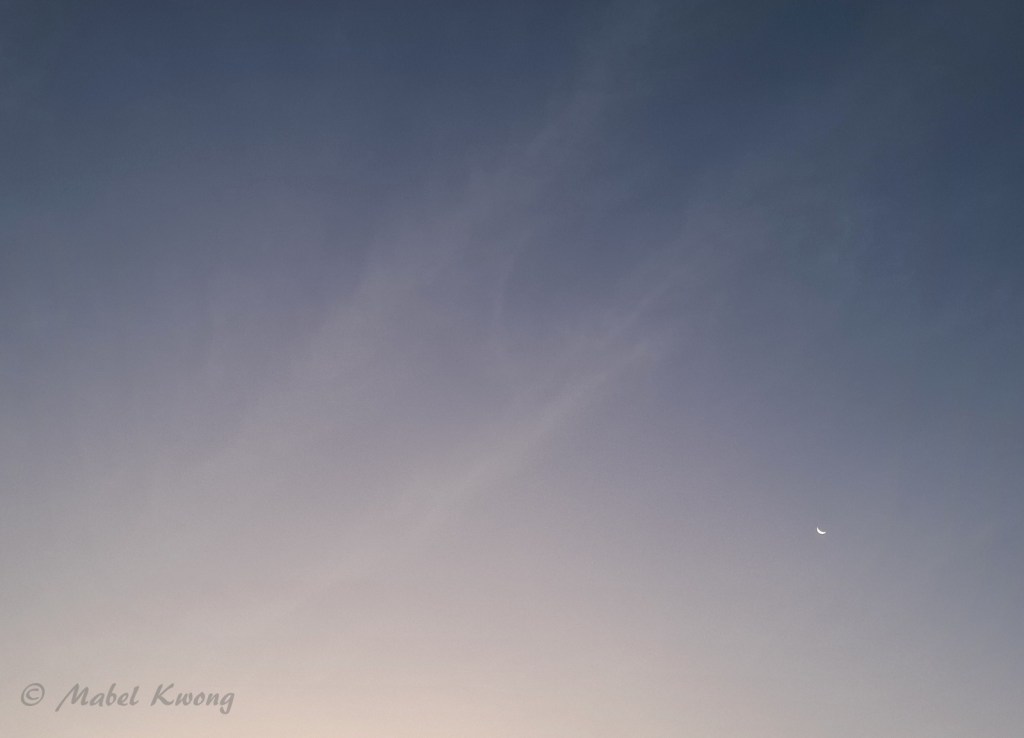
I look up at the sky and the Moon greets me. The sheer resplendence of the Moon, rising high and shining unapologetically against a fast-darkening twilight sky. Enthralled, I catch myself thinking, Why blend in when I can stand out? Dare to stand out, dare to shine… I remember the Moon shines because of its relationship to the Sun. Aren’t we all a part of each other’s stories in some way…
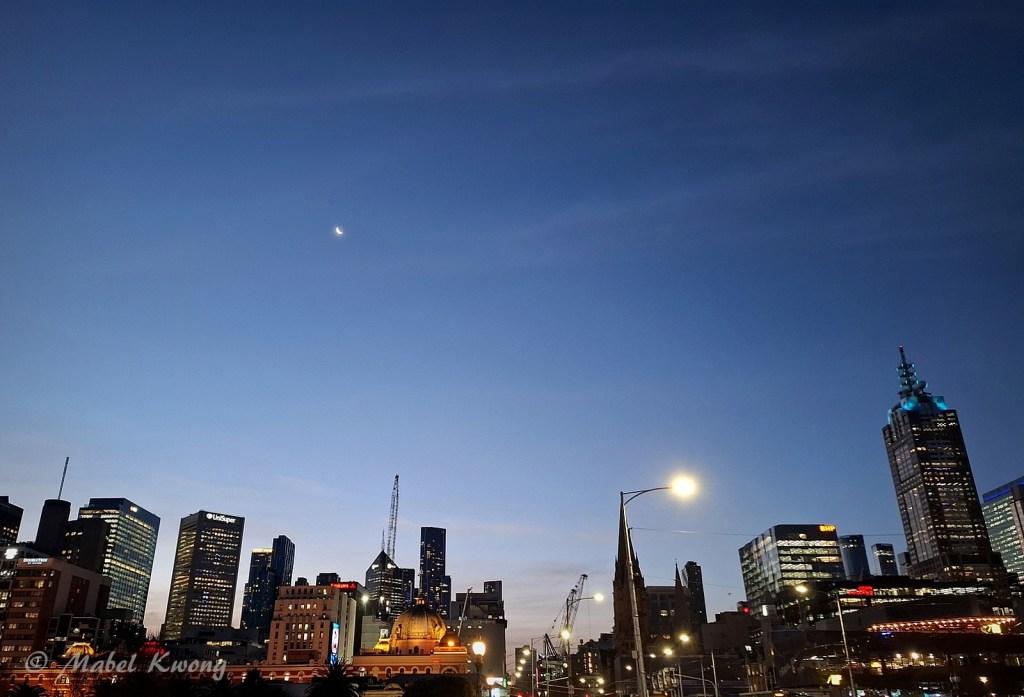
In the depths of soul searching for what we identify with in a season, we find peace in defining our boundaries through accepting or rejecting labels. People change us in ways we don’t expect, and it is through engaging with The Other that we understand ourselves on a deeper level.
Despite solace in creativity, countless occasions my frustrations of being Asian Australian and in the in-between are still, well, frustrating. That will always be a reality. But I’m content with my cultural identity being neither here nor there – in other words not having an explicitly assured cultural identity. Content that belonging is experienced in transient moments.
And I’m content with probably ever not being able to connect with parts of being quintessentially Chinese or Australian. For the human experience is where perfection is an elusive fantasy and reality entails lessons in accepting ourselves and each other as we are.
There’s no right or wrong way to identify or not identify at all, with all kinds of people living, accepting and relating in difference.
Perhaps the more we contemplate our sense of self and living with difference, the more we realise how little we know – and the more we discover about ourselves and others.
‘Two things fill the mind with ever new and increasing admiration and awe, the more often and steadily we reflect upon them: the starry heavens above me and the moral law within me.’
– Immanuel Kant, Critique of Practical Reason (1788)
The Sun slips past the horizon. I step back on the footpath and continue my walk. Almost time to head home but for now, I admire the crescent Moon for what it is tonight. No matter it’s phase, the Moon illuminates the sky.
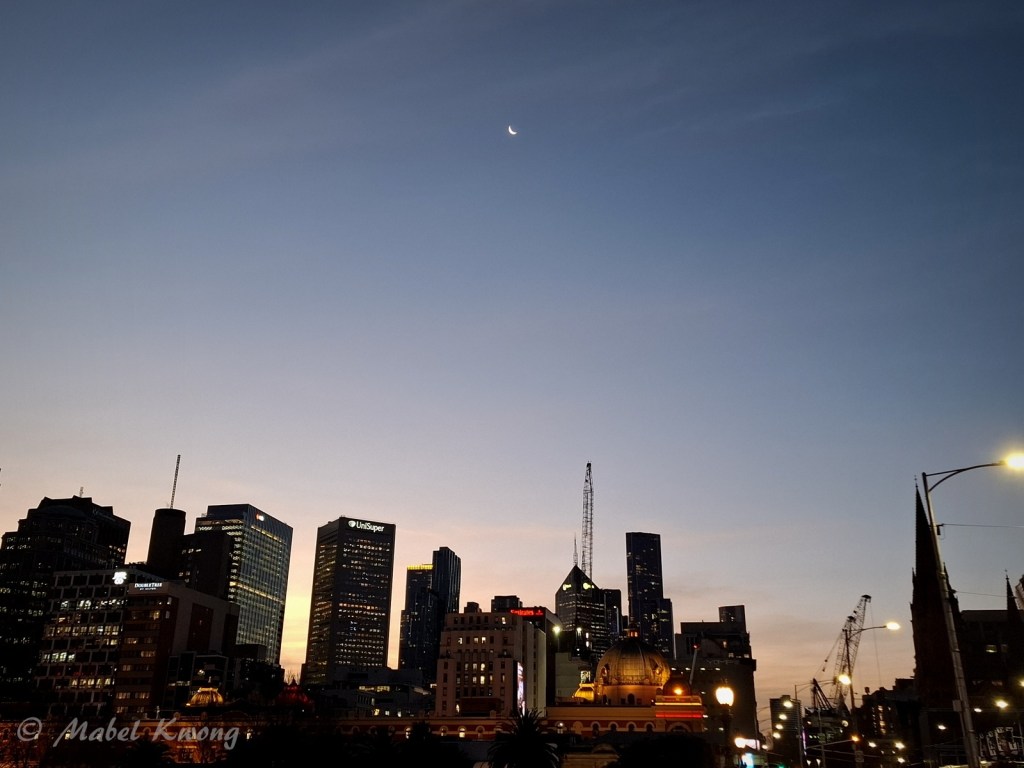
When I am lost in reverie putting pen to paper or wandering under a twilight sky like tonight, I don’t put a label on myself. As much as I am descriptive of them, the furthest thing on my mind is being Asian Australian or Chinese. Or a writer, introvert or other descriptors…
In such moments, I feel content at simply being myself – Mabel.
The ‘I’ within us is never concretely defined for the concept of self is fluid, and identities shift considerably in the in-between. In embracing shifts and differences in perspectives, there’s a realisation that we don’t have to align with just one culture or embody everything that is one culture.
While labels, cultural identities and where we are so-called from are parts of our story, we don’t always need to be defined by them. Rather they inform our narratives and layers in our journey of where we are now and who we are becoming.
What cultural labels or identities do you resonate with?


Share your thoughts. Join the discussion