
Finding a sense of belonging is not always easy. Belonging might seem elusive when you struggle with conflicting intercultural identities. Or when you feel like an outsider among groups.
Perhaps belonging starts with self-acceptance. Look within to accept yourself as you are. When you accept your cultural traits that you like and dislike as part of your core, you might feel closer to the experience of belonging.
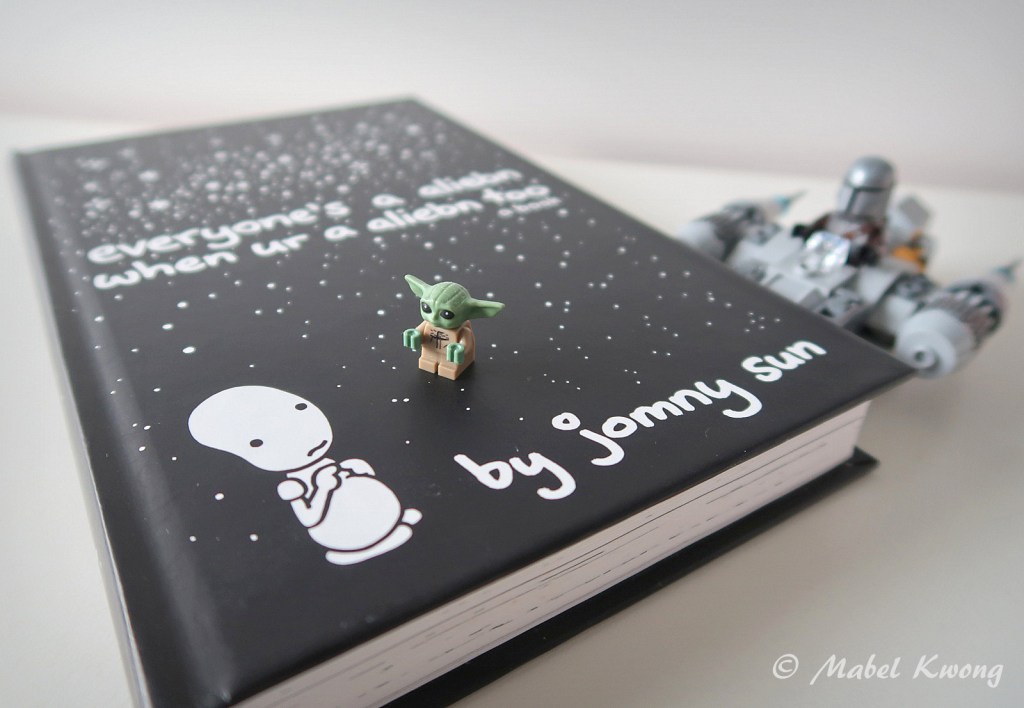
The concept of belonging is complex and interpreted differently across cultures. Emotional bonding, shared values and spiritual connection are some things encapsulating belonging. It is a subjective experience within tangible places, family, society and more.
I often ask myself, ‘Where do I really belong?’ Too Asian or too white all the time, pandering to ethnic stereotypes yet still not subsumed by my family or friends. With an accent hard to pinpoint, ‘foreigner’ is ascribed to me regardless of aligning with how others sound. Uninspired by manuscript rejections from publishers, I walked the classic path of civilised corporate existence.
This last one hits hard as writing is my passion. Being Chinese, I often feel that I don’t belong as a writer. I can’t run from my past: a past conditioned to be very much logical. One of doing things based on reasoning, following conservative rules and tradition, and compounding material sufficiency.
Such traits, my Chineseness, earn a dislike deep within me. Just how do these parts of my personality support me as writer? Instinctively I flounder as a writer without a creative rulebook and there’s no such thing. So frustrated at wasting writing and wracking my imagination for hours only to write one paragraph. So lost on my direction as a wordsmith experimenting with writing genres and wondering the returns. So much so that I hide a lot of my writing and presence as writer.
Sitting up past midnight writing about being Asian Australian has been my catharsis over the years. The late night silence invigorates me. No other voices. No other presence. Just me writing and writing away into the seemingly endless nights.
I am me. I am my labels and more. I scribble these random fervent thoughts down on paper. An incomprehensible story in front of me. Scrambled but most certainly intuitive, uncanny ideas. When my soul feels free, I am inspired.
Self-acceptance is about embracing the layers of yourself, flaws and all. Psychologist Russell Grieger understands it as: ‘you are less than perfect…unconditionally accept(ing) yourself without judgment’.
Confronting how you identify can be, well, confronting. Confusing too. It may feel like some traits are better than others. Proud of some parts of your culture and ashamed of others.
I can find myself questioning if I should be more loyal to doing things aligned with my logic-inclined abilities, or chip away at the uncertainty of writing. Will I end up hating the writer side of me more? Will I disappoint one side or the other? After all, belonging encompasses making time and participating in spaces as your authentic self. With respect to polarity or duality, oneness lies in the paradox of identity.
‘All opposites are identical in nature but different in degree….There is no such place as ‘up’ and no such place as ‘down’ – each is relative to the other.’
– Sue Tompkins, The Contemporary Astrologer’s Handbook
So how does self-acceptance manifest here? It’s so easy to fall into feeling helpless, ashamed and defensive about being ‘too different’, and not relatable enough to belong to something wider. Perhaps self-acceptance emerges from approaching intercultural identities as complementary. It is the letting go of victim mentality, a realisation that you don’t actually lack anything all along. A challenge lies in balancing and blending of your conflicting cultural nuances, in evolving how you think and equally feel about your liminal self.
As I write up late, the shenanigans of the mundane daytime hours seem so far away. Tranquillity beckons. There’s something mysterious yet so magical about the witching hours. It’s almost as if anything is possible. Limitless possibilities seem within reach. Limitations seem merely things that go bump in the night. I can’t help but let my guard down and feel optimistic about being a world famous writer…
Writing up late is like a ritual for me. It is a space where I carve time to write, and I write. In fact, that’s probably where my logical side comes in handy – sound reasoning to pick the most quiet and appropriate time up late to ignite my passion for writing…

Intercultural identities come with an edge: an ability to stand apart and stand in your uniqueness despite being circumstantially boxed in. When you embrace your cultural differences that are so unlike anyone else’s, you belong to yourself. In the words of Maya Angelou, ‘You only are free when you realise you belong no place — you belong every place — no place at all.’
A greater appreciation of belonging arises out of the experiences of non-belonging.
With self-acceptance comes composure. With composure there’s level-headedness, seeing how your different cultural traits add value to you in search of belonging. In turn, you have the grace to show up for others and for who they are.
You also judge yourself less, and less likely judge others. Embracing the paradoxes of intercultural identities guides you towards an awareness of different perspectives. It awakens a sensitivity to hold space for understanding where other cultures come from – a non-negotiable in connecting intimately with both yourself and others in the fragility of belonging.
Blending elements of different cultures within writing has developed my storytelling approaches to connect with others. At school in Singapore, my English teacher commented on my writing, ‘Wonderful, lots of detail!’. It shaped the foundation of my writing, ‘Asian style’: detailed down to the minute detail, circular, justifying. Later in Australia, a very different style of ‘Western writing’ challenged me: big picture argument, directive, analysing. It is (was) a perspective so foreign yet it fascinates me. I detest my naturally logical mind: incompetent at applying this linguistic outlook, let alone wrap my head around it.
No writing style is better over the other. Quite simply, it’s different styles of thought and expression of the writer and individual. Driven by passion to write and resonate, the wrestle between my intellect and imagination unlocked something in the writer in me. Write one idea, one point in one sentence; share striking detail and sentiment to add depth to my yet incomprehensible stories. That is my countless nights of non-fiction writing, the practice of articulating my thoughts across varying cultural rhetoric.
Slowly but surely, stating my presumptions up front in words didn’t seem impossible. Then weaving in and unpacking thoughts through story follows naturally. It is humbling to evolve and traverse bridges between cultures to speak my truth, much gratitude for paths and communities this journey has offered. The dance between logic and imagination uplifts the writer.

Naturally there are challenges in staying connected to yourself, and in belonging to a greater whole. For some, systems of oppression and invisible hierarchical structures are a constant reality. Conforming and resigning to the status quo might be convenient to belong, even making life easier. But deep down you long to set free what you stand for.
Publishing is a competitive industry, and making a living out of writing takes a lot of effort. Because of this sometimes I waver in my traits and in the writer who I am. I sober up from the rush I get from writing my book up late, wondering if cultural representation of writers will change. I am reminded that I am a slow writer, instinctively thinking ideas through and thorough before actually writing anything. A book 10 f—ing years in the making. Where am I among everyone else? Once again, I feel like I don’t belong as a writer, being Asian and all.
The Other is in front of us as much as it is within Us.
There is much fragility in belonging and asking ‘Where do I belong?’. For vulnerability is at the heart of connection and the relationship with yourself, just as much as it is with others. Where there is inclusion, there is exclusion. Alongside cultural clashes and changing personal priorities, quite often a sense of belonging is transient.
In comparing yourself to others, you fall into focusing on your most negative traits and critical self-talk. You lust after an identity that never truly resonates.

If there is one thing I learned about staying up late writing, it’s that having a sacred space nourishes the soul. It nurtures self-acceptance. A space where you aren’t compelled to judge yourself – just being who you are, as you are. It’s where you don’t hide from yourself and instead desire yourself.
‘Your sacred space is where you can find yourself again and again…a joy that comes from inside, not something external that puts joy into you — a place that lets you experience your own will and your own intention and your own wish so that, in small, the Kingdom is there.’
– Joseph Campbell, A Joseph Campbell Companion: Reflections on the Art of Living
Maybe your sacred space looks like a walk under the stars. Or solitude at home. Or with others who hold space for you as you find yourself. A sacred space is where you have the power to go within to feel and gain perspective on who you are. To accept and be at one with yourself, and understand what belonging means to you.

Sometimes I laugh at my logical nature late at night. Logic grounds my thoughts into stories. It illuminates my creative side. Yet a lot of the time I still write incomprehensible stories. But not everything needs to make sense. It just has to feel right.
Often up late writing, I watch each light in each window outside turn off one by one. Staring outside into the darkness roaring back at me, I am reminded that in surrendering to solitude and personal quality time, you hear and awaken a belongingness to your authentic self. I have the choice to be me.
In these existential moments, I don’t think about hiding. I think about who I am and what I want to share: I am a writer. I am an astrologer. My mission is to normalise talking about the times when we don’t belong in a culturally complex world. And you can read the rest here 😊
Belonging starts with a conscious relationship with yourself, and in many ways self-acceptance. Accepting yourself for who you are is a journey of finding yourself again and again. And a journey that guides you to be at one with yourself, a wider community and a greater whole.
What does belonging mean to you? Do you have a special place or activity where you feel like you belong?


 Mabel Kwong
Leave a reply to lisa thomson-author Cancel reply