
If you’ve been to Australia, you might notice the colours green and gold stand out quite a bit around the country.
That’s because green and gold are regarded as the national colours of Australia. Both colours arguably symbolise what it means to be uniquely Australia and Australian on different levels.
There are a few reasons behind how green and gold came to be the colours of this country, and these reasons are tied with history and events of today.
For a long time there were no official national colours in Australia. Historically blue, gold and green were commonly used to represent the nation. It wasn’t until 19 April 1984 that green and gold were formally recognised as our national colours, formally proclaimed by then Governor-General Sir Ninian Stephen on advice from then-Prime Minister Bob Hawke.
Green and gold has long been associated with Australia’s national sporting achievements and competitions. Australia’s cricket team, the Socceroos, the Matildas and really most Australian sporting teams don green and gold uniforms when they play international matches. Our cricket team was the very first national sporting team to wear the colours– namely in the form of the baggy green (dark green cricket cap) during the Ashes tour of England in 1899.
Green and gold are relatively bright colours, and it’s not hard to spot to these colours on players on field during a match. Similarly it’s not hard to spot the typical Aussie fan and cheer squads in the stands; many Aussie sporting spectators are not shy of wearing green and gold as they cheer on Australia at sporting events. There’s the Green and Gold Army: Australia’s premier football support network supporting our soccer teams playing abroad, organising tours traveling alongside these teams with green and gold tour scarves, hats and other memorabilia.
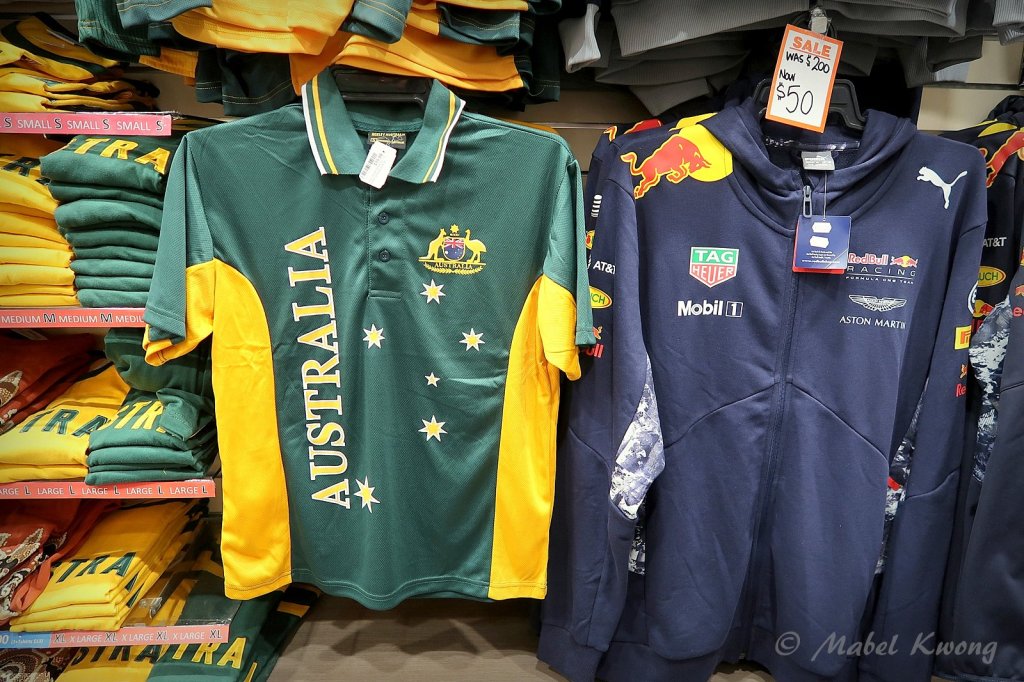
It’s not hard to find Aussie cheer squad merchandise at souvenir shops in Australia. Think green and gold jerseys, tank tops, banners, flags, scarves, capes, towels, umbrellas and more. The other day I was wandering around a souvenir shop in the city and noticed one such green and yellow polo shirts cost around $15-30 per piece – and the more you buy, the better the price. To be honest these shirts seemed great in terms of quality, not thin and not see-through…but with bright colours that looked ready to run in the wash.
More specifically, the colours green and gold are symbolic of Aussie sporting pride and entertainment, symbolic of national pride and togetherness through friendly rivalry, and what some might call ‘mateship’.
Green and gold is also associated with the golden wattle, Australia’s floral emblem. Also known as the acacia pycnantha, the plant is a shrub around 6-8 metres tall with dense clusters of yellow flowers and is native to south-eastern parts of Australia. It’s a flower is capable of withstanding the harsh Australian weather in the face of droughts and winds. Around the time of Federation in 1901, there was heightened interest in the Australian environment. The Wattle Club in Victoria held Wattle Day demonstrations each September to encourage recognition of the flower as a mark of patriotism.
The golden wattle was formally proclaimed the national emblem at Australia’s bicentenary on 19 August 1988. The golden wattle, and in turn green and gold, is symbolic of patriotism, resilience and unity of the people of Australia.

Think of green and gold, think of Australia’s abundant natural surroundings. There’s Australia’s blazing sun. Abundance of beaches and sand. Lush lawns and grass across wineries. Eucalyptus trees and over 92 million acres of eucalyptus forest and bushlands. Over the years, I’ve spent time roaming many an Aussie beach, tanned (and baked and burnt) under many summer suns, trekked through grassland alongside kangaroos, danced on grass and fell down and rolled on that grass…
Consequently, the mineral gold makes up a significant part of Australia’s history. In the 1800s, gold mines were discovered and this led to a series of gold rushes around Australia. The promise of gold attracted locals and migrants to relocate to these prosperous areas. A green and gold Australia: a visually stunning abundant place, riches right below Aussie soil, the lucky country for some.
Green and gold are two colours synonymous with a number of Australia’s flags and official symbols, colours arguably part of the nation’s identity. There’s the Golden Wattle Flag which was designed to represent strength and unity of Australia. The Boxing Kangaroo Flag is displayed and paraded at Australian sporting events, considered our sporting flag’ so to speak. The Bicentennial Flag comprises a yellow outline of Australia against a green backdrop, and both the Christmas Island and Cocos Island flags bear similar colours.

A lot of the time national flags correspond to a country’s national colours. That’s not the case with Australia, and there has been talk the colour blue could be our national colour too. Australia’s national flag is blue, red and white: based on the Blue Ensign with the British Union Jack. The Australian Aboriginal flag is made up of the colours black, red and yellow. Up until the 1984 proclamation, there was debate on whether Australia’s national colours should be a combination of blue, green and gold. After all, the Commonwealth Coat of Arms prominently features gold and a bit of blue. The Order of Australia medals awarded to Australians who demonstrate meticulous service are medals primarily of gold and blue. In addition, the Australian passport is a navy blue colour.
One can argue Australia probably did away with blue as a national colour as this colour has ties with British ensigns. Perhaps not much of a surprise given Australia broke away from British settlement and every now and then there are proposals about incorporating green and gold (alongside doing away with the Southern Cross) into a redesigned Aussie flag. Flags, symbols and colours are not just represent our shared values, but at times also our political associations and allegiances too – playing upon sensitivities which we often don’t see eye to eye with.
* * *
In Australia it’s common to see local retailers cashing in on the green and gold to market and sell what they have to offer. Colour is essentially branding and power, and a study on brand and identity showed that choice of colour can increase brand recognition by up to 80%. Australian food chains, grocery chains and the tourism sector commonly adopt green and gold as part of their campaigns. Time and time again KFC turns green and gold to support Aussie cricket in the summer: some KFC stores were painted green and gold in 2013-2014 and in 2017 there was the HCG Buckethead Army campaign where gold and camo-coloured KFC buckets were sold in store. The Sunshine Coast ran a tourism campaign during the 2018 Commonwealth Games enticing tourists to swap ‘gold’ for ‘green’ – that is, enticing tourists to enjoy the state’s greener pastures such as the beaches, lush hinterland and local food scenes.
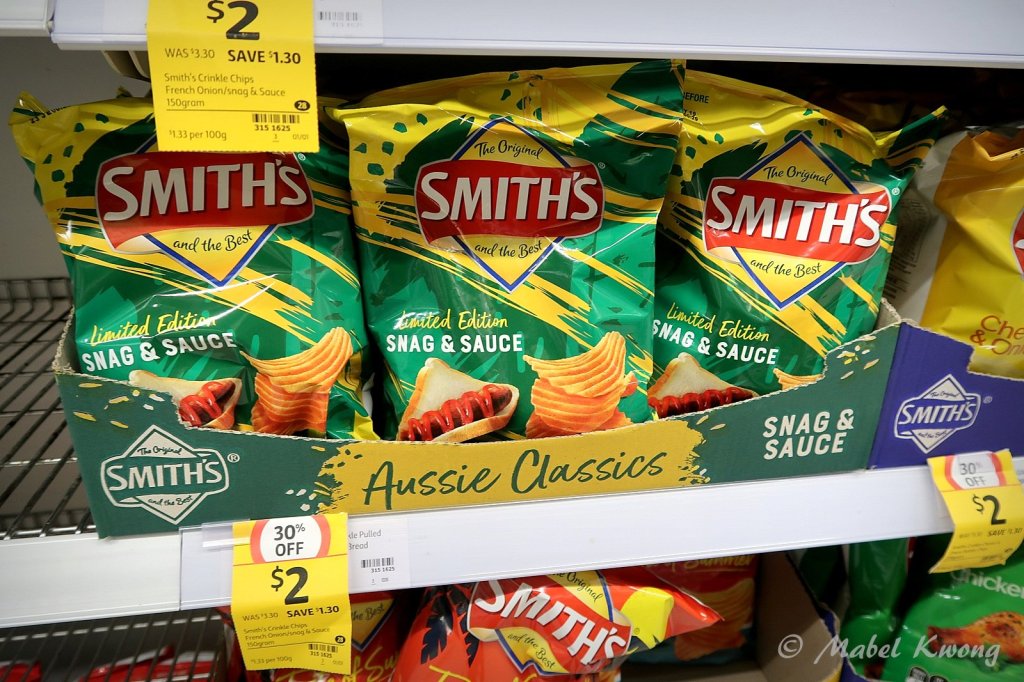
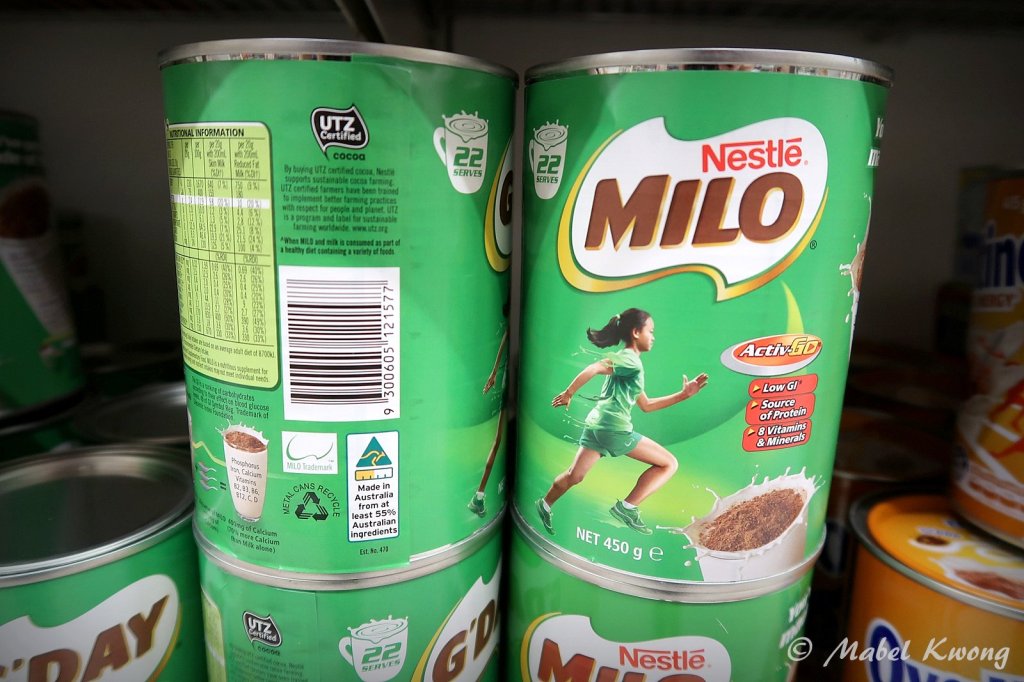
The other day I was walking down the potato chip aisle at Woolworths and saw packets of limited edition Snag and Sauce flavoured potato chips. The potato chip packets were green and gold, probably in the spirit of Australia Day which is just around the corner. Also, the other day a friend of mine in Malaysia showed me a tin of Milo he bought – on the tin was the green and gold Australian Made logo, and my friend wondered if this Milo was better than the made-in-Malaysia Milo.
Thus, green and gold are arguably colours emotionally tied to many Australians. They are colours you may see a bit more every day here, maybe more when you grocery shop or looking for your next best travel destination around Australia. They are colours that symbolise proud, distinctive Aussie character and values, proudly and uniquely Australian.
Green and gold were colours I actually remember quite clearly growing up. When I was five and went to pre-school, the school uniform at my school was either a green and gold checkered dress or a yellow top and green pants. Though in (international) high school my class was allowed to wear jeans every day, I had friends from other (state) schools wearing green or blue coloured uniforms.
Back then as a kid in pre-school, I didn’t have an issue with my green and gold school uniform. I did note it was a rather bright coloured uniform in contrast to the plain white blouse and navy blue skirt uniform I wore for primary school in Singapore. In Australia, each school outlines its uniform code; uniform colours might be chosen according to a school logo’s colours (my pre-school’s logo just so happened to be green and gold), and these days school uniforms are designed to make students feel like that they belong.

Notably, there are Australian state colours. That is, different states in Australia formally associate with different colours when it comes to representing themselves, and certain colours have become associated with certain states through popular use. For instance, Victoria’s colour is navy (maybe black as well since many Melbournians like wearing black clothes), NSW’s is blue and white and Queensland is maroon – colours which are commony seen during sporting games between states. While green and gold might symbolise who Australians are on a national and global scale, state colours are colours that might mean a closer connection to home.
At the end of the day, colours are what we see all around us. They might touch us emotionally, and certain colours might bring us closer to certain people and places.
What colours do you associate with Australia?


 Mabel Kwong
Leave a reply to Sue Dreamwalker Cancel reply