
Asian women dating white guys. White guys dating Asian women.
When it comes to Asian-female-white-male or AFWM couples, perhaps these relationships are built upon yellow fever, fetishization and sexual preferences. Or perhaps not.
Some see these couples as just another kind of couple. Others disapprove.

People get together for different reasons. Each AFWM relationship and any relationship for that matter works differently. Not everyone is a stereotype and it begs the question: why do AFWM relationships get judged stereotypically?
Here in Melbourne, interracial couples are common. My professional and social circles are culturally diverse and interracial couples aren’t an issue with me.
I’ve chosen not to share my personal relationships online. So if you’re reading to find out my relationship status or dating preferences, stop right here.
This piece is not an attack on any relationship or the worshipping of one. It’s commentary on judgement surrounding AFWM and intercultural couples and thoughts on what makes relationships work.
To hate or not to hate on yellow-fever?
Yellow fever is a term often describing someone who is obsessed with Asian culture. In the context of AFWM couples, this obsession is a sexual desire for Asian women, a fixation for stereotypical traits of Asian women such as submissiveness and petite body parts. In short, yellow fever objectifies, exotifies and fetishizes Asian women.
This phenomenon arguably stems from the idea of Orientalism. Critiqued by Edward Said in 1978, the ‘Orient’ represents the East and is constructed from a Western perspective in a post-colonial era (East as passive, West as active). Orientalism is a study on knowledge and power between East and West. During WWII and post-Vietnam and Korean wars, over 20,000 Japanese women were enslaved as prostitutes to service American soldiers.
Creepy and disgusting are often words used to describe those with yellow fever. Over the years I’ve had white guys trying to get my attention. One a hot summer’s afternoon in Melbourne, I was waiting for green light to cross the road. A white guy about 30-40 years old wearing a T-shirt and board shorts ambled up to me. He glanced down and said, ‘Nice slippers. Very small’.
I looked down at my open-toed sandals. How long you’ve been watching me. The guy went on, ‘Where are you from? Singapore? Aaaahh, I know Lee…Kuan…Yew. He was a good man.’ The light turned green and I walked across the road, away from the guy and the 24-hour brothel right behind us.
I kept walking and didn’t look back. It was a creepy encounter. But I didn’t feel angry. Just not my type of person. And I let it be.
When is yellow fever a problem? That’s a matter of perspective. Writer Sheridan Prasso suggests in The Asian Mystique that when preference becomes a fetish is a fine line; both preference and fetishisation are ‘so pervasive in relations between East and West’. Nicolas Gattig builds upon Prasso’s argument, proposing it’s up to an individual if they feel objectified. In other words, yellow fever might not be a problem if two parties like each other for the stereotypes that they are.
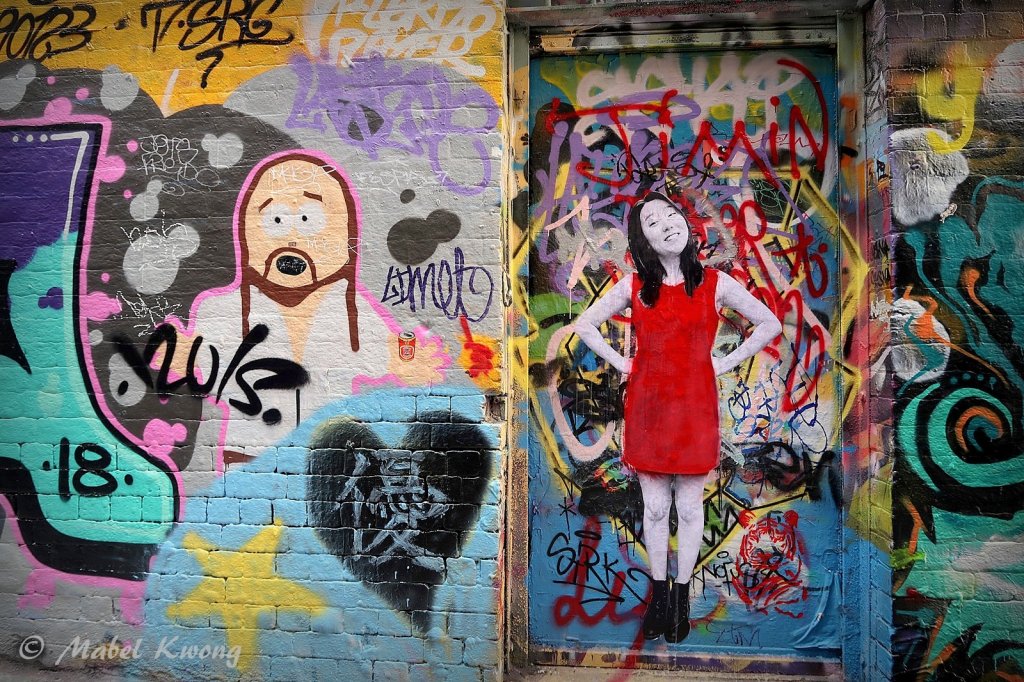
Yellow fever could be a problem when it’s something you can’t stop thinking about a certain person or culture, clouding other opinions. However, yellow fever arguably is always a problem as it reduces others to stereotype – belittling identities, individual strengths and the right to representation.
It’s okay to have certain tastes, preferences and attractions. Feelings can be hard to control. Yellow fever can be hard to control. From a scientific perspective, psychologist Bill Von Hippel discusses that during sexual attraction, our minds recognise contrasting biological factors. He proposes people are attracted to others who they reckon have different genes or the potential to be a good parent – ‘optimal outbreeding’ supposedly presents less genetic mutations.
From a sociological perspective, if you constantly spend time around people of particular backgrounds, you could be attracted to them. After all, people gravitate to what they are familiar with when wanting comfort.
Today many women of Asian background are independent, accomplished and articulate self-worth. Domineering Tiger Mums are forward thinkers and long-term planners. Some of you might be attracted to these personalities and are intrigued by how cultural background shapes them. That’s a different kind of fever alongside yellow fever, another kind of attraction.
It’s one thing to be attracted to someone for their physique and personality today. It’s another thing to want to be around that physique and personality tomorrow and in the years to come.

Relationship racial micro-aggressions
When you date someone of another race, you might get called racist and a traitor towards your own race.
It’s racist when a white guy prefers a quiet Asian woman and see their supposed submissiveness, luscious dark locks and vagina as their most attractive features. It’s racist when a white guy feels a white woman can’t be exotic.
Some Malaysian women mention they much rather date westerners. They cite reasons being a lack of connection with conservative Malaysian men and traditional Malaysians norms, and find more investment out of adventurous westerners. A case of white fever and racist? Arguably yes because not everyone of the same race fits the stereotype.
Sociologist Karen D. Pyke writes this behaviour can be referred to as internalised racism which is the ‘internalization of racial oppression by the racially subordinated’. In other words, the more someone associates themselves with their cultural (minority) community, the more they self-hate.

Within my circles, Asian women have said they get rejected by Asian guys for being ‘too outspoken’ or ‘too opinionated’. They’ve also mentioned the challenges of ‘being Asian’ and ‘being Western’ in AFWM relationships, both mindsets equally important to them.
Then there are some of my Asian friends who’ll only go out with another Asian person. When someone prefers going out with someone else of the same background, oddly enough it’s not usually seen as racist but an oath to cultural loyalty and pride. As dancer and author Jenevieve Chang writes, maintaining ethnic purity and solidarity is number one in Asian cultures.
You might not agree with every part of your own culture. That’s okay as you’re entitled to have personal preferences. It’s not racist when you don’t hate on cultural differences.
So can you selectively date someone of another race and not be racist? Maybe, or maybe not. In any relationship, at some point one’s cultural background will come up which can be talked about and accepted, or swept under the rug. Relationships aren’t perfect but if you can’t accept some things about a relationship, maybe that’s not the relationship for you.

Practicality and privilege
Some have practical approaches to intimate relationships. Some get together because they feel they can get something out of a relationship. Some want someone who can look after them. Some want someone to pay their bills. Some want someone to feel a little less lonely.
Most of the time you get along best with your peers or people around your age. Looking at AFWM relationships with large age gaps, one can’t help but wonder why these couples get together. The story might go: woman wants to ‘marry up’ and move to a developed Western country for a more comfortable lifestyle, and white guy wants someone to dote on him.
Maybe it’s true love for some ‘matchmaking mail-order bride’ AFWM couples. Or maybe not because some of these relationships in Australia end in one party exploiting the other financially. Filipina e-brides on sponsored visas here have faced domestic abuse and are six times more likely to face abuse compared to mail-order brides from another country.
In China, well-educated ‘leftover women’ are finding suitors in western men through online dating. With being single often seen as a letdown in Asia, some independent Chinese women say Asian men are terrified of their accomplishments and see western men as more open.
Such relationships could be relationships of convenience, relationships where the Asian inferiority complex and white privilege comes into play. In the midst of infatuation and wanting to be in a relationship, cultural stereotypes are exploited for personal gratification.
When a relationship is a relationship out of need, someone will give you the time of day. However it doesn’t mean it’s a relationship where you’ll understand each other for years to come.

Judgement from the world
When you go out with someone of a different race, chances are people will judge.
People might be concerned about cultural differences between you and your partner. Others might look at AFWM relationships and be bitterly reminded of white sexual imperialism during the colonialism eras of WWII.
At times Asian women who date white men are accused of being brainwashed by white superiority, accused of being white women in yellow face who can’t truly represent other Asian women – the start of breeding out one’s own race. This is ironic as we all have our differences and have evolved biologically over six million years.
Maybe that’s why some look down on mixed-race kids. If you have Asian-Western heritage and look more Western than Asian, you’re seen as having a better chance in life. After all, whiteness – Western genes – dominate society.

Hapa, halfies, hafu, half-bred, half-caste are some (offensive) names ascribed to those of mixed lineage. Half connotes not whole; not whole connotes something broken and lost forever. This ties in with the notion of ethnic purity: people can be proud of their heritage, traditions and lessons passed down from generations – and want to maintain that for ‘face’ or pride.
So when you go out with someone of another race, you might be seen as ‘not good enough’ for someone of the same race. Not worthy enough of dating among your own race because you’re too ‘different’ for having different beliefs. A black sheep ending up with someone of another race who is considered at the bottom of the barrel too.
Do others have a right to tell you whom to date? No. You’re entitled to your choices and the way you want to live. In the face of resistance from others, that’s when you really question what a relationship means to you and why you stand by that person.
* * *
Every relationship works differently. Some relationships take on a more modern mindset while others a more traditional perspective. Everyone has different wants and needs in relationships at different points of their lives.
Notably, the representation of Asian women, Asian men and Westerners in the media underpins stereotypical assumptions about multicultural relationships. In mainstream media and Hollywood, Asian women are often portrayed for the male gaze while Asian men as meek caricatures not worthy of affection, undateable and emasculated (with the Asian masculine space erased). Western voices dominate. In the eyes of mainstream media, one race is worthier than the other.
In reality, many are capable of seeing the bigger picture and seeing each other as more than stereotypes. Hence why I’m writing this post, and probably why there are countless articles out there on intercultural relationships, representation and gender roles.
Hence why I’m not hating on the white and Asian guys who told me I’m nothing more than: a body to get down on and fill up. Too Western. Too Asian. Too quiet. Too opinionated. A white worshipper. A China doll, Ling ling. A good girl. A six pack under the arm. I just choose not to associate with these kind of people.
Your choice of a partner comes down to what you look for in someone, who comes your way, whether you get along and more. Each relationship depends on preference as much as circumstances and chance.
In mutually understanding relationships, there’s no need to prove to your partner you’re good enough for them. No need to justify your backgrounds to each other, just like no need to justify each other’s annoying habits. You can learn from opposites while feeling comfortable around similar traits.
‘Where are you from’ matters but there’s more to a relationship than one’s background. Inevitably there are cultural differences in most relationships. Once you accept these differences and acknowledge they matter, it’s not a big deal. But it’s always a big deal how you feel about each other every day, and a big deal about trusting each other for a long time to come.
What do you think about interracial relationships? What makes a relationship work?


 Mabel Kwong
Leave a reply to Bela Johnson Cancel reply