
Shy. It’s often experienced as drifting in a state of quietness. A quiver in speaking our truth. Grappled with as stumbles and stumbling in communicating.
Then in some cultures, shyness and quietness offer moments of consideration as we engage with others.

Such traits aren’t weakness. Both shy and quiet lend a sensitivity around others, guiding us to notice we each need space when communicating and connecting.
‘Would you say you’re shy?’ my therapist asks matter-of-factly. She is an Anglo-Saxon, middle-aged woman sitting right across from me. She looks me in the eye.
I am quiet in my chair. I wonder in silence. Am I shy? When have I been shy? Hmmm…
I grew up in a typical Chinese family in South-East Asia, where shy and being quiet is considered normal. I was used to this. Until I moved to Australia where people are generally more outspoken and louder. Where I had to shift from being comfortably quiet to not-so-quiet to be a part of things.
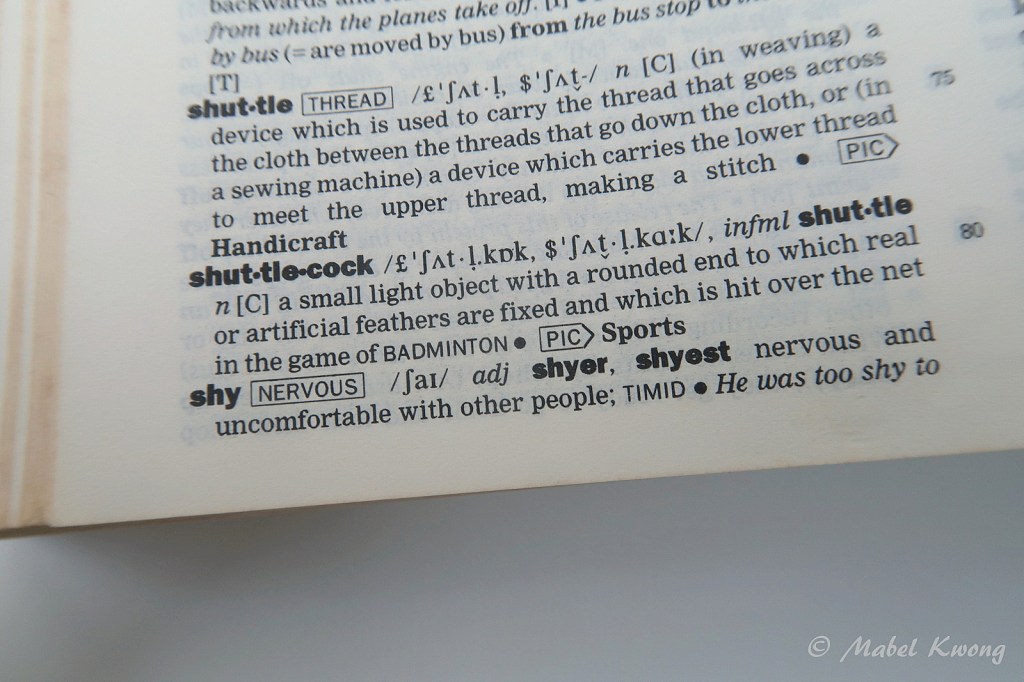
Shyness is acquainted with an unsettledness while talking, conversing and interacting with others. The Cambridge International Dictionary of English defines shy: ‘nervous and uncomfortable with other people; timid.’
Shy is a spectrum. Varying factors may explain shyness, such as our genetics, childhood or life experiences. Shy may creep up on us when we’re around certain people, places and settings. And not elsewhere where we may feel more at ease or simply, it’s a different kind of day.
I wrote previously that in Chinese culture, there are more positive attitudes towards shy. Confucius morals place importance on hierarchical relationships and collectivistic rituals; quiet congruence towards superiors is considered maturity. Naturally being quiet is seen as a mark of respect. In my time in Singapore and Malaysia, coming across silence in the classroom and meetings is the norm while questioning steps on being ‘disruptive’.
On the other hand in individualistic-centred Western societies, shy and quiet are often seen as stranger. Such as in Australia, piping up is considered as contributing and participating.
‘Saving face’ in Chinese culture could also be impetus to lean on quiet. The trepidation towards appearing as something less than, perhaps instils an inclination towards quietness unless there’s something burning, convincing to be said. Whereas in Australia, a question like ‘Do you have questions’ is usually a genuine invitation for discussion.
There’s also something about being typically Chinese where you know your place, speak from that place. It’s speak to serve, rather than speaking from a place of personal passion. On the contrary, Western-centric approaches tend to champion a right to assert our opinion. But this isn’t always the most constructive as we’ve seen on the world stage in current times…

I feel at ease in the session with my therapist. I really do. Another week, another session. Another conversation about where I’m at. Open, unhurried.
I ponder my relationship with shy. My gaze instinctively shifts from my therapist to out the window. Just like how I was brought up Chinese – gazing away is respectful and quick talking back is rude. Old habits die hard…
A memory from years ago comes to mind: I’m standing on the podium at a community radio event in Australia. Up there as speaker, a face for Asian voices. One of my first speaking gigs.
A sea of unfamiliar faces in the crowd look up at me. My feet shuffle on the spot but they won’t shuffle back time.
Shall I start now? Are they going to understand what I’m saying? Incessant whispers of critique in my head. Self-judgement on my part at its finest.
My eyes cast down at my script. Eyes back on the crowd. Down at my script again, here, my sense of solace… I talk, and this repetition continues more than I like. The crowd continues to look up at me – I think I’m alright and living what Seneca once said: “We suffer more in imagination than in reality.”
A lot of us disdain shyness no matter how favourable it’s posited and revered. It feels like an utmost struggle in self-expression. Feels limiting when we have something to say but just can’t.
Shy feels like something we want to escape.
Perhaps embracing shy and quietness as embodied strengths is what’s needed to share more readily and comfortably. Organisational psychologist Adam Grant’s concept of ‘power in powerless communication’ arguably supports this. It’s a style of communicating where asking questions, admitting shortcomings and tentative approaches builds genuine trust and connection.
The word ‘power’ in ‘powerless communication’ is fascinating, for each of us bring our personal power to each conversation and more so, in each moment with others. With Chineseness, power and the power to speak is time and time again deemed as earned through seniority and longevity. And silent trusting in a speaking, often older leader is not surprising. Whereas in Western culture it’s generally more accepting for anyone to fight for personal power and their place to speak their mind.

In experiencing shyness and quietness, our power and choice to engage with others feels elusive. It takes a moment more to say what we want to say: gathering fragments of thoughts, filtering social cues and plucking up courage to just speak.
“Original thoughts are like shy animals. We sometimes have to look the other way – toward a busy street or terminal – before they run out of their burrows.”
– Alain de Botton, A Week at the Airport: A Heathrow Diary
The silence stretches between me and my therapist. She waits.
My mind wanders in the stillness of the room and beyond. As my eyes rest on the tree outside, I realise I’m not sure what my therapist means. My presence retreats back inside.
“What do you mean by shy?” I ask point blank. A curious question of the like attracts chagrin or ire around my Chinese family when I dare question what is. Where either I come across as ‘no-face’ unknowing or pushing one’s buttons.
But this is precisely the potential, sensitive side of shy. To listen, to think, to be thoughtful. In quiet is where we listen to ask questions. Are humbled to discern different backgrounds and acknowledge our imperfections. Bring an openness to be curious in not knowing.
As Grant discussed, when we step back on assertiveness and regard each other as equals, we show interest in what others have to say. In shifting from respectful silence to sharing opinions, that often involves a changing mindset towards hierarchies – recognising each opinion and interaction deserve time.
No doubt each of us communicate, talk and share things differently. Some quieter, some louder than others. When we recognise such different tendencies and with a willingness to adapt our cultural approaches, we start somewhere connecting.

I’m aware that I asked an open question. But is it too blunt? Am I demanding a black and white answer? Subtly accusing my therapist of not being clear? Seemingly my ‘mild and demure’ Chinese side coming through right here… Or is it simply personality? Or both?
I can’t help but offer a few more words. ‘Do you mean shy at home or at work? Socially?’
My therapist pauses, though unperturbed by my interjections. Therapy is a professional setting. Nonetheless, like any civil interaction, it takes two to engage consciously and meet each other where we’re at.
She keeps things open as always. ‘Maybe feeling fearful or uncomfortable speaking around others. Or perhaps finding it hard to talk in a group. Or responding to social cues.’
My mind searches for words…
…and I have words. ‘I’d say I’m shy. But not all the time. Some days I say what’s on my mind. Other days, I’m not sure if people understand me.
‘When I’m quiet it’s usually because I’m trying to put thoughts into words.’
Just like how not all of us fit a cultural stereotype, there are different reasons for being quiet. Notably, the notions of shy, introversion and quietness overlap but at the same time, each are mutually exclusive.
Shy is complex. People are complex. Not everyone who is quiet is shy.
Not all of us will ever fully understand shyness or quietness. Fact is, we never really completely understand a person or the culture they come from. Though what we can is seek understanding in a moment of interaction, where you and I are at now.
“When we know what something is called we can dialogue with it… When we have the name for something, we can start to understand it. When we understand, we can forgive both ourselves and others. Understanding a situation more clearly also provides a way forward.”
– Sue Tompkins, The Contemporary Astrologer’s Handbook.
Ironically it takes speaking up to feel less uncomfortable in dialogue and to be heard as a Chinese person or migrant in Western society. What might guide us here is the ‘why’ behind shy – a point of reflection guiding us on evolving how we communicate.

I leave the session wondering where else I’m shy. You know what. I can be shy and quiet online too, procrastinating sharing my writing online. For I write and I wonder: No, this story doesn’t have a place… How would others read this? Will they get it? No… And so it goes.
And so it goes I realise I’m stuck on self-judgement. It takes a while but at some point, it dawns that there’s nothing to lose by starting somewhere simply saying what’s on my mind. Not even lose face as staying quiet, I may never be seen and heard.
And so it goes I’ve written another post here.
Being not so quiet all the time opens up possibility for ourselves and each other. Taking the gentleness of shy, and the heart of speaking up, we come to share and connect more thoughtfully than we may realise.
Would you say you’re shy? Or readily outspoken?


 Mabel Kwong
Leave a reply to mylarty Cancel reply