
Home may be a place that you know well. Or a space that resonates with you. Or something that seems elusive. The feeling of being most at home is a multi-layered, complex construct, and it can be hard to explain.
As someone who is often caught in between Eastern and Western cultures and has lived in different countries surrounded by different languages, no place has ever felt like home to me. About a year ago, an evening stroll inspired me to think a bit more about this thing called home.
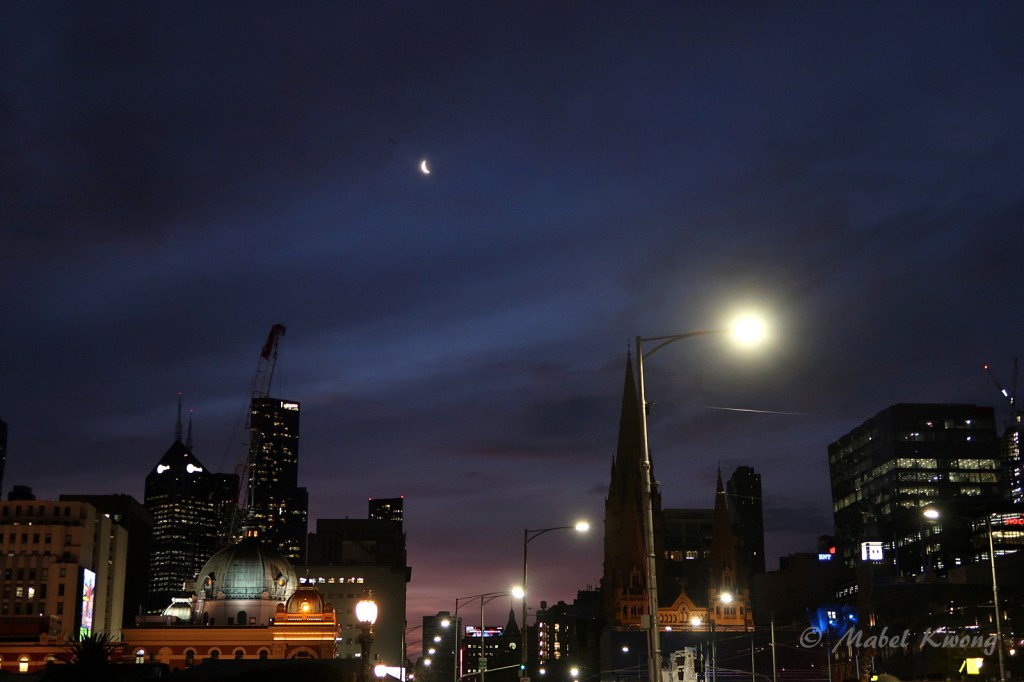
Striding down the Princes Bridge, the crisp autumn air picks up. Pulling the zipper up my puffer jacket, it is just another routine evening of sunset photography in Melbourne CBD. The cold is always a familiar part of it at this time of the year in May, no surprises.
Clouds blanket the skies above. Just what the weather app on my phone said this morning. The 5pm sun begins to slip past the horizon in the distance, rays peeking out from behind the clouds. I slow to my usual spot along the bridge overlooking the water and city skyline. As if on cue I fumble in my bag for my camera, turning it on. Settings set. Check. Glance at my phone for sundown, 5:27pm. Check. Pull my jacket’s hood over my head ahead of the impending night chill. Check.
Familiarity is what we come to expect of a place called home. That includes familiar sights, sounds, smells, tastes and atmospheres of your house and surrounds. Security and repetitive routines. Predictability and stability, the mundane happening on time like the sun rising and setting each day without a doubt.
Naturally home could be a place of familiarity and comfort, a place where you feel the pull of roots or memories of burgeoning beginnings that once were a lifetime ago. But not always. It could be somewhere where the tug of familiarity intermingles with dissonance. Just as a privileged home may be comforting, it may be unpredictable and unsettled. Chaotic perhaps.

The feeling of being at home is intertwined with a sense of belonging. When you feel at home somewhere, chances are you fit in. Belongingness, according to Baumeister and Leary, is a universal fundamental human need and maintained through lasting, stable interpersonal bonds. This is easier said than done when you have uprooted a fair bit in life, leaving things and people behind – and it feels as if there is no truly going back ‘home’.
Living the life of constantly moving around Asia and Australia, the constant screaming of my Chinese parents for teenage me to wear dresses as I dressed androgynous and the constant goodbyes to people I met, the typical notion of belongingness is relatively void to my being. For me, for most part, home is elusive.
Yet the ambiguity of home is not a bad thing. Some of the most important lessons come from searching for a way forward when you are on the sidelines. That is when you learn where the notion of home starts for you, and the true value of it.

Home is not purely rooted in relationships towards others, and its significance goes beyond physical foundations and the tangible. This idea echoes Emerson’s philosophy of transcendentalism which emphasises the power of intuition and looking within. It suggests self-reliance and remaining true to one’s identity leads to meaning, as well as nature nurtures our spirituality. With transcendentalism, each individual unlocks limitless potential when choosing to engage with both the physical and beyond.
Perhaps this is offers a way to profoundly reflect on the feelings of home: what do you cherish in the present? Where, and how, can you step into your true self and feel most comfortable and at ease?
Standing on the bridge lookout, my gaze traces the increasingly clouded skies above. No sign of tonight’s moonrise as keen as I am to catch it – more keen than seeing the sunset actually. Though this city is one I know so well having lived here half my life, I can never predict when the sun and moon will actually visibly shine over the skyscrapers.
Though you don’t always see the sun or the moon in the sky each day, they show up above and their presence can always be felt. It can be said that what ignites feelings of home are moments taken for granted. That could be someone a continent away reaching out to you. Or getting to go on your favourite hike each summer. Or finally having time to get lost in the creativity of art.
For me, there is an unexplainable feeling of peace, contentment and completeness every time I write or mess with art. It feels like where I want to be and where I am supposed to be when I am telling stories in the written word. In line with the philosophy of transcendentalism, connecting with your individual creativity is a way to understand and work through issues in life.
Arguably home is never just a place. It is a feeling within. It is emotion. Home can be unique moments and fleeting experiences that are hard to describe but simply speak to you.
Self-regulation (along with group conformity) is one way to fulfill belongingess. That involves adapting one’s behaviour, emotions and mindset to feel heightened belonging to ingroups, especially within supportive environments. When it comes to feeling at home, self-regulation can look like emphatic listening while others encouraging you to be who you are.
But not everyone has supportive environments. Maybe feeling at home involves blending in with conventions that resonate with you. Maybe, and likely more so, feeling at home involves being your true self without feeling like you are being a burden.

The clouded sky turns a deeper shade of blue across the city, and the sliver of sun slips past the horizon. No moon above to behold. I snap a few shots of the majestic dawn of blue hour this evening. The straggly homeless man sitting on the footpath a few feet behind me coughs. Weekday peak-hour pedestrians filter past without a glance at him. And without a glance at me and my camera.
I relate to being invisible and seen as ugly all my life. The years of blatant and silent racism encountered as a Chinese person in Australia is shocking yet memorably bittersweet: ‘Go back to where you came from!’ ‘Where is your accent from, Hong Kong?’ ‘You speak English very well!’
On one hand, discrimination divides. On the other, it is human nature to be wary of those different from us as we seek to care for and defend our tribe. At the end of the day, all of us inevitably seek to protect what home feels like to us – or continue the search to find the feeling of home.
It is hard to call myself Australian. In fact, I have never been comfortable saying, ‘I am from Australia’ when talking about myself, and I don’t. It feels like imposter syndrome and a lie when people reckon I hail from Australia and I am not sure what to say about that. And I just let it be. At the end of the day, the term ‘Australian’ to me is a formality of birthright. The experiences of being Asian in Australia are another thing altogether, though.
Though Australia is where I was born, grew up and spent a lot of time here, it feels like a stepping stone towards something greater and spaces elsewhere that speak to me on a deeper level.
Throughout life, not having a country or place to call home never bothered me despite the challenges along the way. Not fitting in in various spaces did bother me for some time but that is a story – fittingly for a book – for another day.
Critiquing transcendentalism, one can say it is a mindset that is overly optimistic and idealistic, maybe crazy. There is much to be attained when there is groundedness, intellect and purpose, and with the tangible and intangible co-existing. It begs the thought that there never really is a perfect home and cultivating belongingness – be it in the form of interpersonal bonds or relationships beyond our physical realm – takes work.
Over the years, writing has inspired and guided me towards where and what feels right for me. No matter how challenging it gets, I have always been the eternal optimist about it with structured routines to keep on writing. Writing is my passion, among other creative forms. It is often in your authentic self-expression that you realise what you desire and seek – and therefore encounter experiences that speak to you.
Perhaps feeling at home is a state of being where you accept and fully express yourself, ultimately connecting with yourself and then connecting with others or beyond. Feeling at home could be something you create or seek to create, and what matters to you matters as much as to the wider world. It comes from knowing yourself.
And sometimes it takes many lessons, many phases of growth and confronting temporality straight in the face to get to a point where a place, space or moment feels like home.
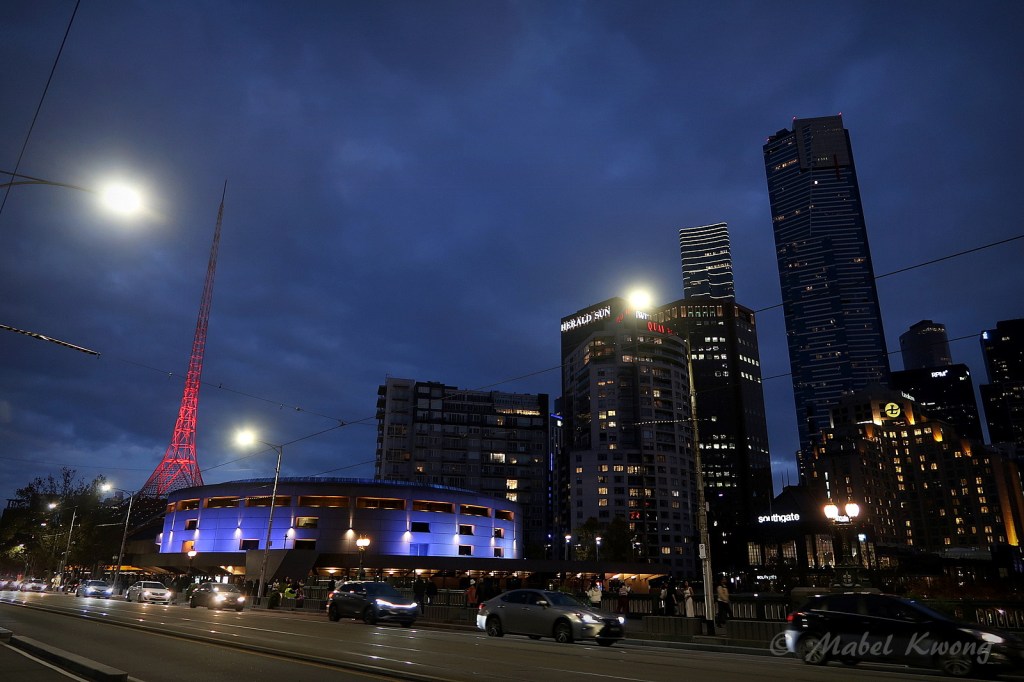
The sun now and truly well past the horizon, I snap a few more photos of the now deep blue hue of the city skyline. It is a beautiful sight tonight, with pink and orange hues weaving across the blue backdrop of the dusk sky.
I lower my camera, look up and take in the fleeting moments of blue hour. Watch darkness and light. Feel powerful and powerless. Well aware of divine timing, along with our free will and choice of unconscious surrender wherever we are, whether we are feeling at home or far from it.

Writer and author Winnifred Gallagher writes that each of us shapes ‘home’ just as much as it shapes us. Perhaps for some of us, her quote sums up our relations with home:
‘The feeling of being “at home” can’t be bought…it comes from an intimate relationship between us and our most personal place.’
I step out from the bridge lookout and onto the footpath. Time to head off. Striding ahead, the autumnal wind blows and I see the clouds part…and the crescent moon of the night shines high up in the royal blue sky.
My breath catches in my throat. I stride forward a little quicker and step up onto the next lookout. Eyes trained on the moon and moving clouds, I raise my camera and let the creativity from within take over.
The chilly wind blows again and the clouds move across the sky. And just like that, the moon disappears. It was a moment while it lasted.
I step onto the familiar footpath once again, blending in with the pedestrians and the fast descending night. For a moment, I belong.
The feeling of home could be right where you are. Or it could always be elusive. Sometimes, it is found within.
Where do you feel at home? What does home feel like to you?


 Mabel Kwong
Leave a reply to Mabel Kwong Cancel reply