
I always pay for my purchases upfront. When I shop for my groceries and chocolates, I pay for them in full. When I buy something slightly more extravagant such as a bag, chair or laptop, I also pay in full. Upfront.
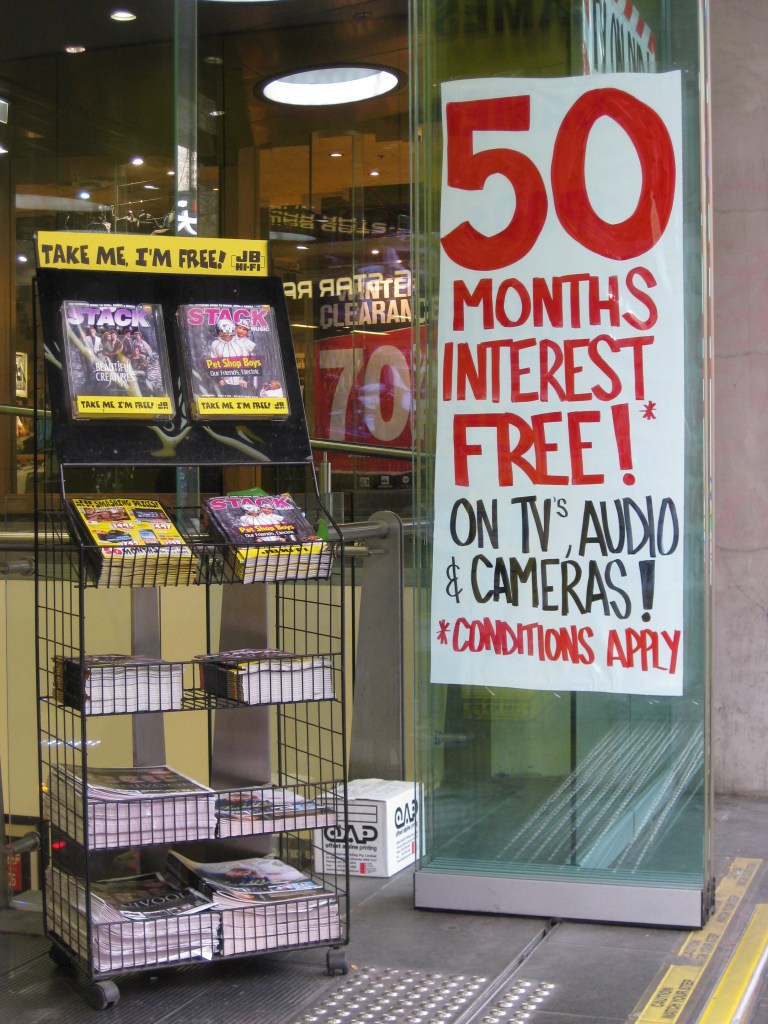
I thought everyone paid in full for what they bought – with the exception of very expensive things such as houses, cars and boats – until I moved back to Melbourne. Paying by installments is popular and heavily in-your-face promoted by countless of places from supermarkets to hardware stores here in Australia.
When I pass what I want to buy to the cashier at Target, I always get asked if I want a “lay by”. That is, I always get asked if I want the departmental store to keep my “purchases” for me, purchases that usually cost no more than $100, until I paid for them in full by installments. While growing up in Singapore and Malaysia for a decade, I was never ever asked if I wanted to pay in chunks when buying clothes, food and furniture.
Paying upfront is very much the preferred method of paying for things in Asia. My dad baulks at paying by installments. While we were shopping for a sofa for our apartment in Melbourne, he sniggered at the signs in Harvey Norman offering two years’ installment agreement payments. According to him, if people choose to or have no choice but to pay by installments, it is as if they “can’t afford what they’re buying” at that moment; paying by installments is an easy way for the cash-stricken to buy luxurious items, forcing themselves to pay through the nose.
Owning material items is deemed prestigious in Asian cultures. So this mentality arguably drives Asians to pay for their purchases all at once. Paying the full price upfront gives Asians the right to immediately attain full ownership of their purchases and show them off and enjoy them to their hearts’ content. There is no need to worry about paying off installments in the coming years, installments that we may or may not be able to pay off in the future and risk finding ourselves strewn with debt.
In addition, Asians frown upon and are superstitious about borrowing and owing money. My parents constantly remind me to pay back everyone whom I borrowed money from before the start of each Lunar New Year. If I did not, they believe it will bring me bad luck money-wise and I will face financial hardships in the year ahead.
There are times when Asians not only just pay in full upfront, but also pay entirely in cash. Even for pricey expenses. Every time we go shopping for clothes, furniture or even a few grocery items, my parents believe in “getting the money ready” and “coming with the cash” to pay for our expenses. A trip to the ATM is always the norm for us before we embark on family shopping trips. Also, it is common for people from China to pay the full amount in cold hard cash at one go for apartments in Western countries. Cash is indeed king for these Asians.
Paying in full and by cash is an opportunity to save on interest that comes with paying by installments and credit cards. Many Asians tend to be rather cautious parting with their hard earned dough, so if they see a means to save money, chances are they will go for it.
This attitude is quite the opposite of the typical “spendthrift-mentality” in the Western world. I have many Caucasian friends in Melbourne who count down the days to pay day. The instant their paycheck rolls into their bank accounts, they hit the shops or splurge their savings on travel – and later moan about being eternally poor. So paying by bit by bit, month by month, would suit them well and perhaps that’s why there is a strong pay-by-installments culture in Australia.
Do you usually pay in full or pay by installments?


 Mabel Kwong
Leave a reply to Ertya Cancel reply