
We all speak English differently. Some of us speak “Singlish”, “Chinglish”, “Manglish”, “Konglish”, “Frenglish” or “Spanglish”, variations of the language incorporating a mish-mash of non-English words.
I am no stranger to flitting around with the overseas crowd here in Melbourne. Whenever I latch onto one of the, say, Singaporean or Malaysian cliques, I hear them spout one of these colloquial forms of English among themselves non-stop.
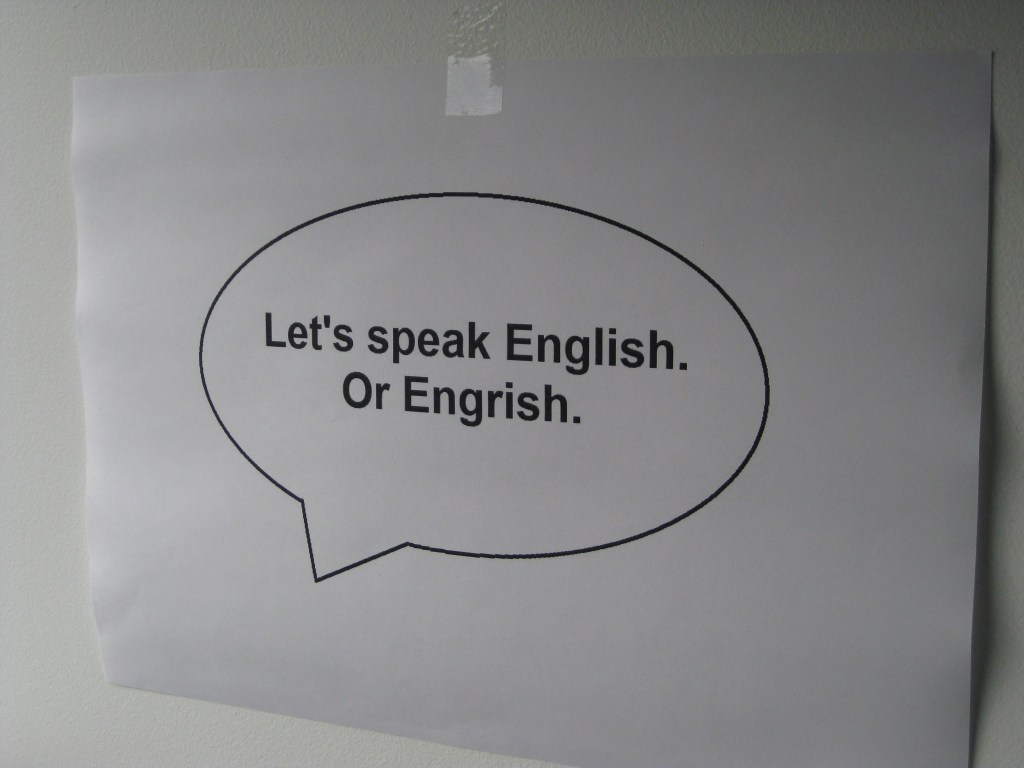
Funnily enough, on many occasions when a Caucasian friend or acquaintance joins us, I hear them drop their usual accent and immediately put on a Westernised English one. When the white person toddles off, they revert back to their normal way of talking.
All the time, we want others to understand what we are saying. Sometimes phrases like “no lah” and “cheh” so commonly sprinkled within some of our everyday English conversations are completely foreign to Caucasians, phrases with tonality and vernacular that can leave them scratching their heads. So it is no surprise for non-whites new in Melbourne or any other Western city to assimilate and adopt Western speech to strike up conversations between white locals and themselves.
However, there is seemingly more to the phenomenon of non-whites imitating gwei los speaking. Sounding “white” is arguably a “face” thing, a means for non-whites living in the Western world who usually speak with non-Anglo accents to assert themselves as equal citizens. For example, many desperate international students tend to drop their accents in their attempts to sound “white” during interviews so as to better their chances of landing jobs in Australia.
As Muslim Reverie has written, “people of color with accented English are treated as somehow having ‘less credibility,’ regardless of their education status” by white and non-white people. I deal with a number of people via phone at work and at least once a week, a caller will ask me condescendingly, “Where are you from?”, after I have answered all of their questions in my slightly Singaporean-Malaysian tinged accent.
When I mentioned this to one of my Caucasian Australian colleagues, she was very surprised and wondered aloud why no one ever asks her this question. I had no answer.
Then there is the case of some non-whites who want to be white. Maybe they are either embarrassed to sound non-white, ashamed of their culture, or at the very least think of the white race and ideals as classy and superior. Sad as it may be, some kow tow, bow down or suck up to Caucasians. I have seen Asian friends of mine let their hearts out in Facebook statuses, lamenting about their efforts to speak more like an American so as to “get more white friends” and make a living in the Western world, never going back to Asia.
Also, countless of times I have walked into shops where the female Asian attendant gives me the silent treatment. Every time a Caucasian walks in, she hurries over to them with an overtly cheery, Americanised, “Hi! How are you?”.
It is no secret that the “fresh off the boat”, FOB, and “foreign” accents are always used for comedic purposes, racially mocked in Western media. Who can blame minority groups in Western society for wanting to distance themselves from the ridiculous stereotype?
My FOB accent was distinctly strong when I moved back to Melbourne from Singapore some time ago. I remember hearing many Asian Australians speak in a strong “Asian-Oz accent” for the first time and thought, “How annoying”. I also remember feeling intimidated by this accent – Asians Australians spoke with perfectly grammatically correct English and I envied this. I think they picked up my hostile feelings and avoided me.
Over the last few years, my FOB accent has softened, though still on the tip of my tongue. A little bit of the broad Aussie accent has crept into my speech, I must say, and I get international students blinking at me when they hear me talk to them for the first time. All the time, I sincerely hope they see, hear me as approachable.
Studies have shown we imitate accents and speech patterns without meaning to and subconsciously yearn to bond with those around us. Do I deliberately try to sound more East Asian while talking to a person who speaks with an East Asian accent?
No.
Everyone is beautiful in their own way, just as all sound is beautiful. Why not just be yourself and speak the way you naturally do all the time?


 Mabel Kwong
Share your thoughts. Join the discussion